
How to Prevent Rust and Corrosion in Diesel Generators in Pakistan
Learn generator rust prevention methods with practical diesel generator maintenance tips. Discover diesel generator corrosion protection for industrial use in Pakistan.
Hospitals and healthcare facilities depend on a continuous electricity supply to provide safe and effective medical services. From operating rooms and intensive care units to diagnostic laboratories and emergency departments, almost every healthcare activity requires reliable electrical power. Even a short power interruption can create serious challenges for patients, doctors, nurses, and hospital management. Generators provide backup electricity during unexpected power outages, helping hospitals continue critical operations without unnecessary interruptions. Understanding hospital power generation matters for healthcare administrators who want to protect patients, maintain medical services, and ensure a reliable operating environment.
Emergency generators for hospitals are designed to provide backup electricity when the normal power supply fails. These systems generally work with automatic transfer switches (ATS), which monitor the incoming electricity supply and detect interruptions or abnormal voltage conditions. When the main supply becomes unavailable, the system signals the generator to start. Once the generator reaches the required operating conditions, the transfer switch moves the selected electrical loads to the backup supply. When normal electricity returns and becomes stable, the system transfers the loads back to the main supply according to its programmed settings. This process helps reduce the need for manual intervention during an emergency.
Healthcare facilities can use different types of generators depending on their electrical requirements, building size, fuel availability, operating costs, and backup power arrangements. Diesel and natural gas generators are common options for commercial and institutional applications because they can provide substantial electrical output when correctly sized. The selection process should consider the power requirements of medical equipment, emergency departments, laboratories, lighting, ventilation, and other essential services. Hospitals should also evaluate fuel storage, ventilation, exhaust arrangements, noise levels, installation space, and maintenance requirements before choosing a suitable system.
Diesel generators are popular backup power options for hospitals because they are available in a wide range of capacities and can support demanding electrical loads. Hospitals often require generators capable of operating essential equipment for extended periods during prolonged power interruptions. Diesel generators can provide dependable backup electricity when properly installed, maintained, and supplied with suitable fuel. They are also available in different capacities, making it easier to select equipment according to a hospital’s power requirements. However, healthcare facilities must consider fuel storage arrangements, regular fuel quality checks, exhaust ventilation, and fire safety requirements.
Gas generators for hospitals can be another suitable option for healthcare facilities, particularly where a reliable natural gas supply is available. These generators use gaseous fuel to produce electricity and can offer operational advantages depending on the installation and local fuel infrastructure. Facilities may consider gas generators because of their fuel arrangements, operating requirements, and suitability for particular power applications. However, hospitals must carefully assess the reliability of the gas supply because interruptions can affect generator availability. They should also evaluate fuel pressure, gas connections, ventilation, emissions, and the manufacturer’s operating recommendations before installation.
Operating rooms require reliable electricity for surgical lighting, anesthesia machines, monitoring equipment, and other essential instruments used during medical procedures. Similarly, diagnostic laboratories depend on electrically powered equipment to perform tests and preserve certain temperature-sensitive samples. Imaging departments also use specialized machines that may have specific electrical requirements. A sudden interruption can disrupt scheduled procedures, delay diagnostic work, and create additional pressure on hospital staff. Properly designed generators for hospitals help reduce these risks by supplying backup electricity to selected departments and equipment.
Intensive care units and emergency departments are among the most critical areas of a hospital because they provide treatment to patients who may require immediate medical attention. These departments use equipment such as ventilators, infusion pumps, cardiac monitors, defibrillators, and other medical devices that require dependable electricity. A power interruption can create serious operational challenges if appropriate backup arrangements are not available. Hospital generators help maintain the electrical supply to designated critical circuits, allowing medical teams to continue essential activities during outages.
Choosing the right power generator for hospital applications requires careful planning because every healthcare facility has different electricity requirements. A small clinic may need a relatively modest backup system, while a large hospital with several operating rooms, intensive care units, laboratories, and diagnostic departments may require a much larger installation. Before purchasing a generator, hospital management should calculate the total electrical demand of essential equipment and identify which departments must remain operational during an outage. Engineers should also consider starting currents, future expansion, generator capacity, fuel consumption, operating hours, and the possibility of using multiple generator units.
Selecting a dependable generator service provider is important for healthcare facilities that require reliable backup electricity. Hudson Engineering has been providing generator-related services in Pakistan since 1999, with experience in diesel, petrol, and gas generators ranging from 5 kVA to 1250 kVA. The company offers generator sales and rentals, along with installation, repair, and maintenance services for residential, commercial, and industrial applications. Its services also include electrical panel solutions such as Automatic Transfer Switches (ATS), Automatic Main Failure (AMF) panels, and control panels.
Generators play an essential role in the healthcare sector because uninterrupted electricity supports patient care, emergency treatment, medical equipment, and everyday hospital operations. From intensive care units and operating rooms to laboratories and emergency departments, healthcare facilities need reliable backup power arrangements to manage unexpected electricity failures. Choosing the right generator, calculating electrical loads, installing suitable transfer switches, and following a regular maintenance schedule are all important steps towards reliable performance. Hudson Engineering provides generator solutions, maintenance, and technical support to help businesses and institutions maintain dependable backup power across Pakistan.

Abdul Khaliq Muhammad Khan is a mechanical engineer and the founder of Hudson Engineering. With over 25 years of experience in power generation industry, he specializes in troubleshooting complex engine failures and designing backup power systems for large industrial facilities. Abdul Khaliq has spent his career ensuring critical infrastructure stays powered. When he isn’t busy on job sites, he writes helpful tips to make sure business owners never have to worry about power cuts.
Learn generator rust prevention methods with practical diesel generator maintenance tips. Discover diesel generator corrosion protection for industrial use in Pakistan.
Explore differences between 100 kVA vs 125 kVA generators in Pakistan. Learn the difference between both generator set to find the right fit for industrial use.
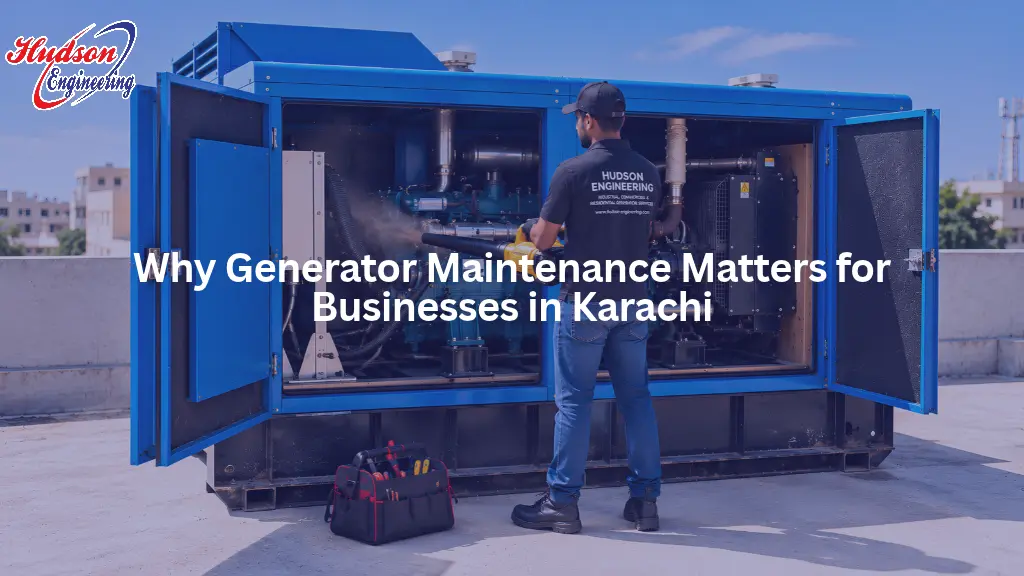
Explore why generator maintenance services matter in Karachi. Learn how diesel generator maintenance help prevent breakdowns & Keep operations running smoothly.